Organizing the garage workshop
A few people asked how the workshop is set up, so here it is while the paint dries.
A good weekend: a decent amount done and some actual rest, which is a rarer combination than it should be.
There were questions about how the workshop is organised, so I took photographs while waiting for paint to dry.
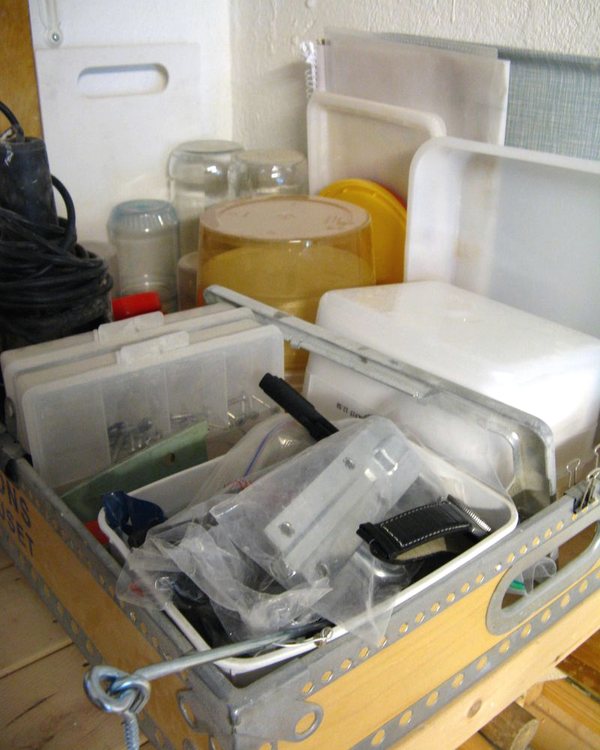
The thing I would do differently
We did not build the bench at the far end of the garage until we had been in this house about five years. Until then it was a row of cast-off kitchen units and whatever the previous owners had left behind.
Were we ever to move, a proper workspace would go in before any other renovation started. Everything else in the house gets faster once there is somewhere to work, and for five years we were doing every job the slow way to save doing this one.
Left to right
The garage is in the basement, under the living room, so the entrance from the house is at one end.
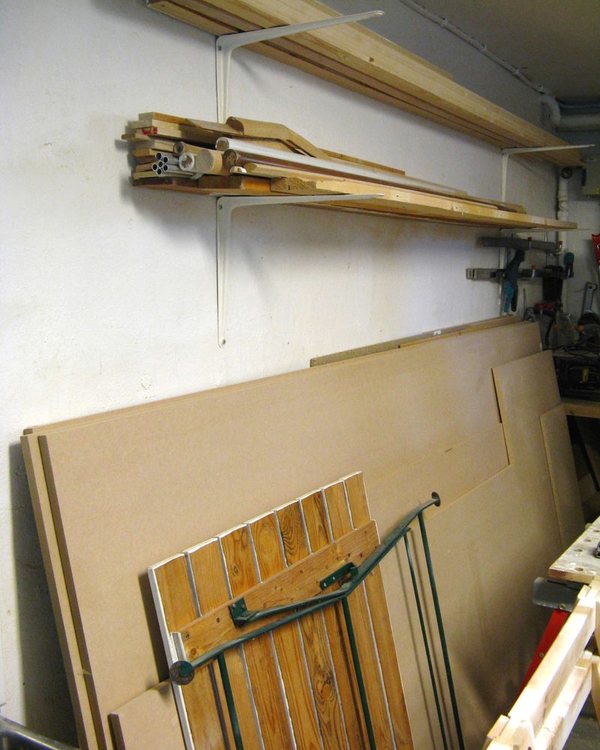
Board stock leans against the wall just inside. MDF and other large sheets. There is an old folding patio table there too, which becomes extra work surface whenever I am painting.
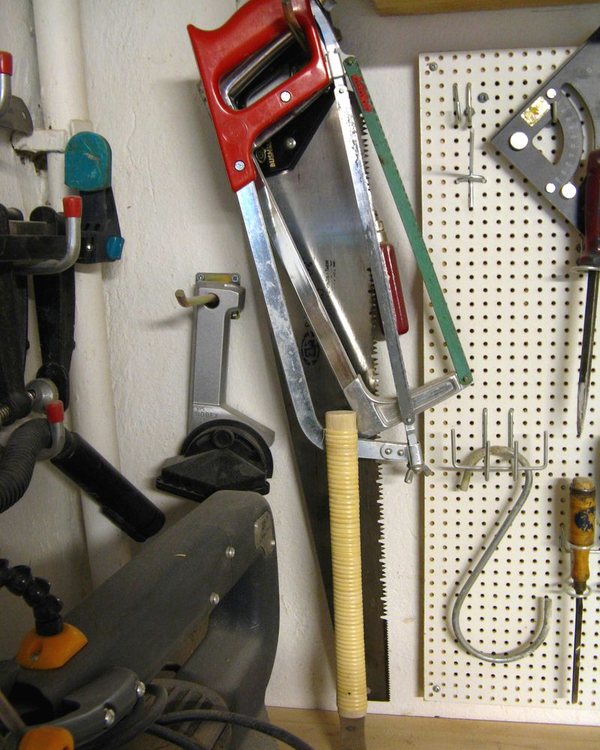
Above the boards, cheap shelf brackets carry mouldings and lengths of strip wood. Long thin things need a long thin home or they end up across everything else.
At the deep end of the bench, a nook holding offcuts too small to stand up and too useful to bin.
Under the bench, left
Power tools, and three plastic bins:
- Clamps
- Hand tools that get used rarely, scrapers, a hand drill, that sort of thing
- Extension cords
Plus a black case with the mouse sander, its papers and attachments together in one place.
Under the bench, right
Four divided boxes: screws, nails, nuts, bolts. The overflow lives in jars screwed to the underside of the shelf above.
A small brush for sweeping down, and a roll of superseded gift wrap. The paper goes over the surface before any painting starts, and it is the single most useful item stored under there.
Then larger bins:
- Rags and dust sheets
- Brushes, rollers, stirrers
- Sandpaper, filler, spackle
- Tiling tools and materials
- Paint
The principle throughout is dull and it works: things that get used together live together, and everything that comes in loose pieces lives in a divided box rather than a drawer.
Filed under Organizing