No. 27 in concrete, the finale
Third and last part, in which the concrete finally goes in.
If you followed the earlier parts of the summer concrete project: the tablecloth weights and candle holder, and the bookend, this is where it ends up. If you have had enough of the preparation, that is entirely fair and you can skip this one.
The form
The mould is a length of thick cardboard tube. I gave it several coats of a natural rubber solution first, which keeps the cardboard from going soggy and stops bits of it bonding to the finished face.
Honestly, I think I could have left that out. The cardboard was thick enough to survive, and the sides of this piece are never going to be looked at. I had some of the solution left from an old project, so it got used.
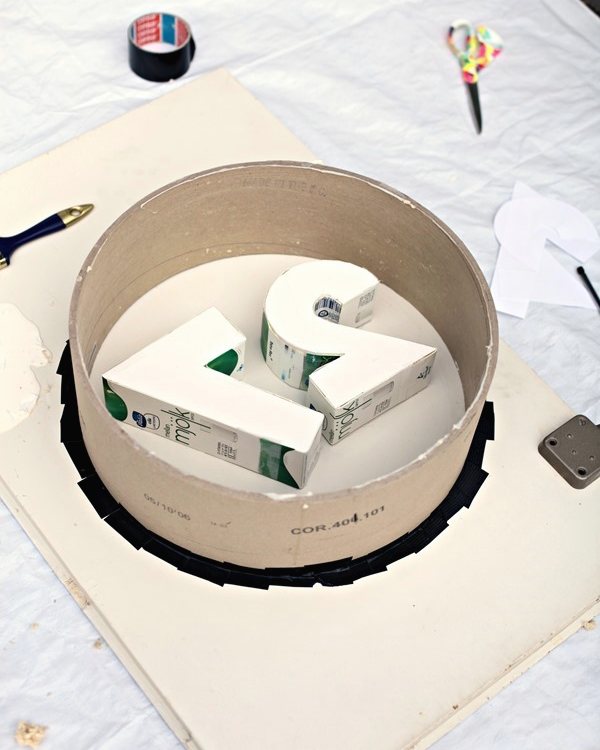
An old door, laid flat, served as the casting bed. The tube was sealed down onto it with duct tape so nothing could creep out beneath the rim, and the numerals were fixed to the door with hot glue so the pour could not shift them.
The numbers go on face down and mirrored. I checked three times. A backwards 72 would have been a long summer.
Mixing and pouring
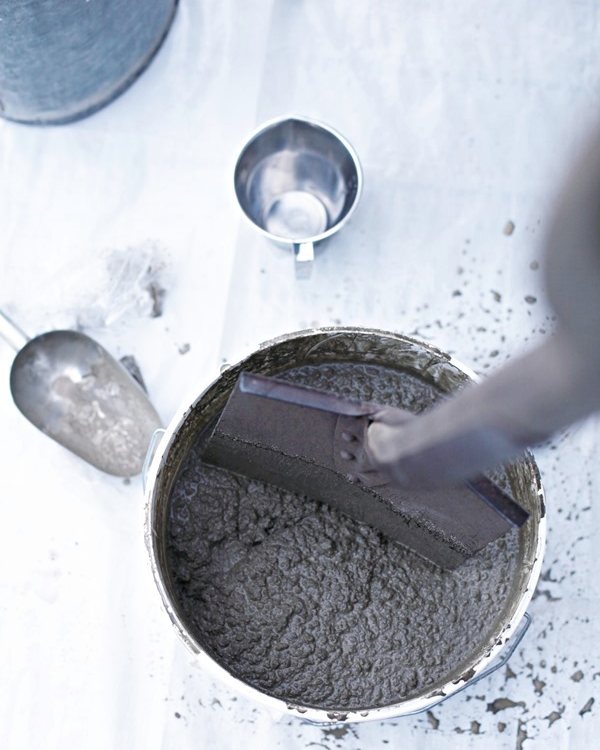
There is no mixer here, so it gets turned over with a shovel in a bucket. The bag prints a ratio; mine runs a little looser than that, because a wetter mix finds the corners of a detailed mould and I would sooner give up a bit of strength than a clean face.
I worked it carefully into all the voids around the numbers first, into every corner, before pouring the rest.
The 2 and the 7 almost touch, and I was uneasy about how thin and brittle the bridge between them would be, so I laid chicken wire across the whole slab and poured more concrete over the top to bury it.
Then I lifted one end of the door and shook it up and down for a while to bring the air pockets up.
Curing
Covered in plastic, left alone for about 36 hours. The plastic is doing real work. It stops the surface drying faster than the body, which is what gives you a stronger, more even cure rather than a crazed one.
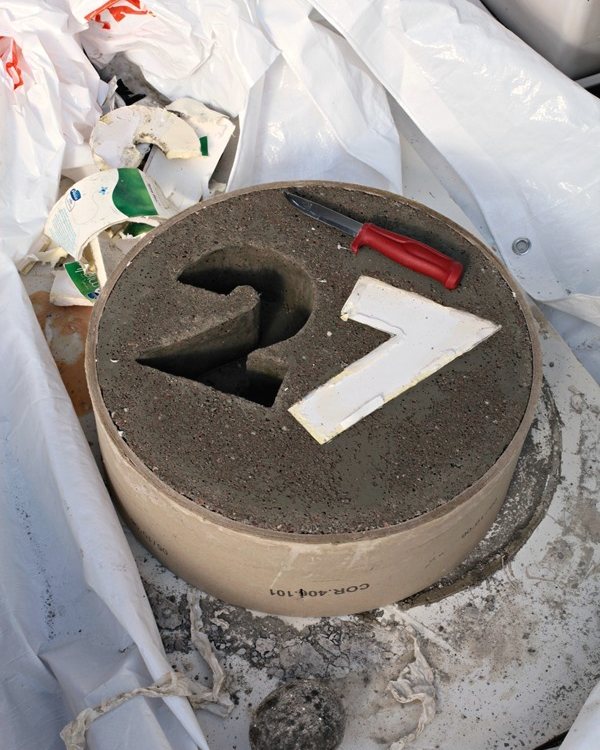
After that I turned it over and dug out the foam numbers, poking them apart with a knife and lifting them out in pieces. Because I wanted things to be able to grow in the numbers, I also had to break through the thin layer of concrete at the bottom of each one, down to the chicken wire, with a big screwdriver and a hammer.
The back, as the cardboard peeled off, is not pretty. Nobody will see it.
It needs to stay damp for another day or so after that, so it got sprayed with water and wrapped back up in the tarpaulin it was lying on.
The result
Apologies for the photographs in this one. The sun was merciless and there was nowhere to move it to.
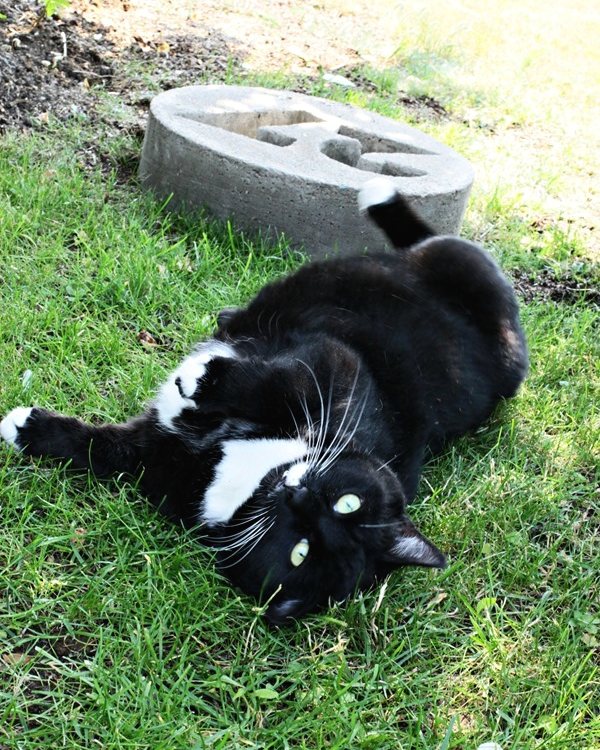
For now the numbers are planted with grass lifted from elsewhere in the garden, which means I can simply mow over the slab. I may switch to fine pebbles, or to a creeping thyme that tolerates being walked on, though thyme would mean trimming the numbers with scissors and I suspect I know how that would end.
It came out well. It will look better once the grass around the edges knits back in.