Painting trick and tip
Two things that have saved me a great deal of contortion.
Two habits, both small, both worth having.
Nails as feet
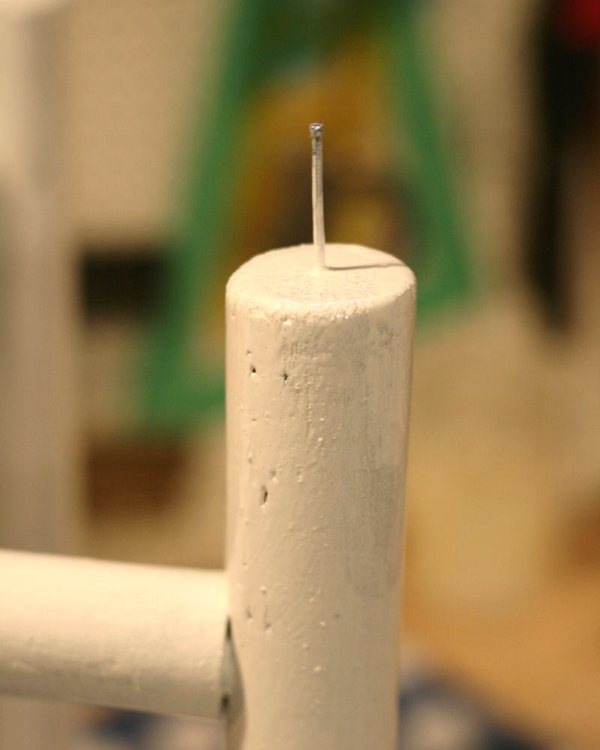
Paint the underside of a piece first. Then drive a few nails part-way in, so their heads stand proud, and turn the whole thing over.
Now it is resting on the nail heads rather than on the wet paint, and the surface facing you is the one you still have to do. No crouching underneath, no reaching round an edge you cannot see, no smudging the face you finished ten minutes ago.
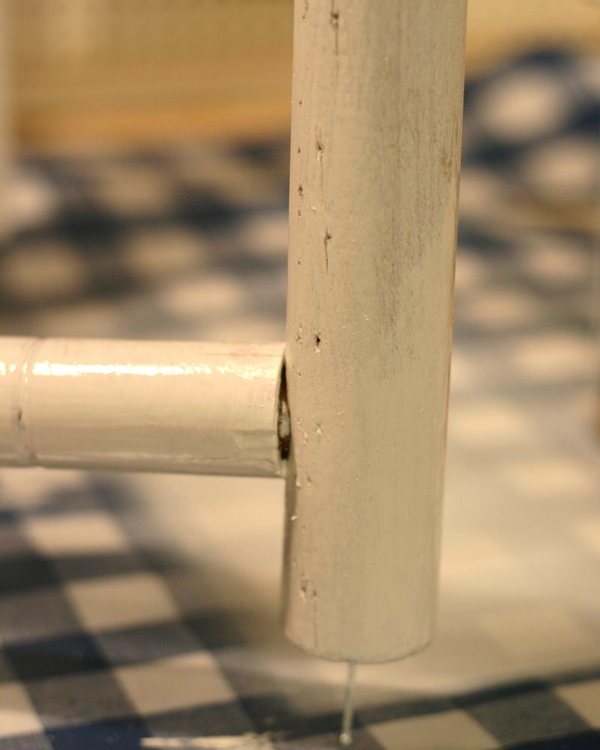
When the paint has dried, pull the nails out and touch up the holes if they need it, usually they do not.
Nail into the underside of the piece, into the bottom of chair legs or the base of whatever it is, so the holes never show and the finish is not damaged where anyone will look.
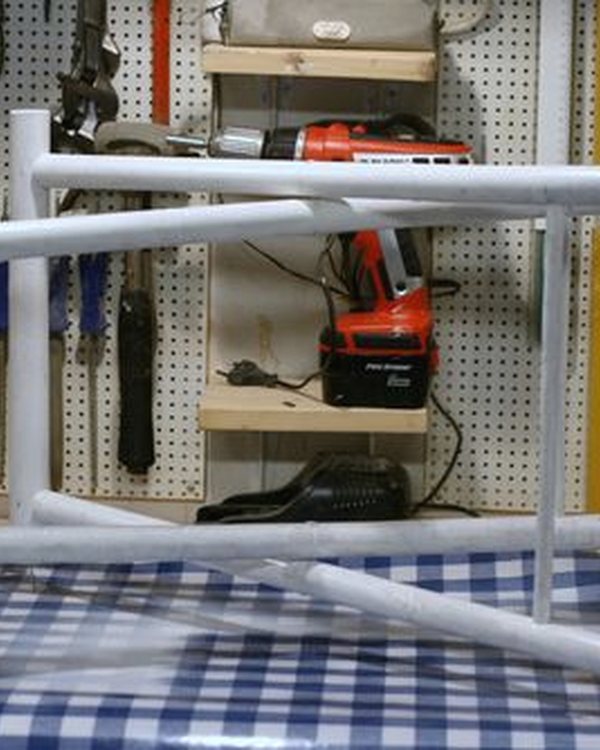
In the photographs here the nails have gone into the sides of the frame instead, because this one folds and would not sit still otherwise. That is the exception, not the method.
Hanging a brush in thinner
For anyone with a pegboard, or able to hammer a nail in above a work top or in the garage.
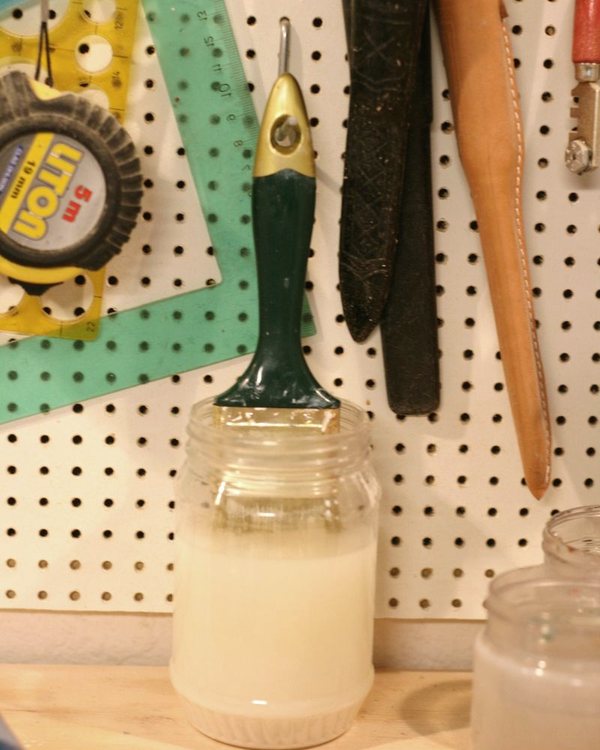
When you are using a solvent-based paint, hang the brush from the nail so it dangles into a jar of thinner, rather than standing it in the jar.
Two reasons, and both matter:
- Standing a brush on its bristles bends them permanently. A splayed brush never comes back.
- Standing it on the bottom means it sits in the paint residue that has settled there, and picks it straight back up.
What you want is the bristles hanging about an inch clear of the bottom, fully in the thinner, with the handle and the top of the bristles above the liquid. The bristles stay wet, and the paint on them sinks to the bottom of the jar and stays there.
I use this between coats, wiping most of the thinner out on kitchen paper before starting again.